
How We Work
Every archive is different.
Most are mixed, unfinished, and emotionally layered.
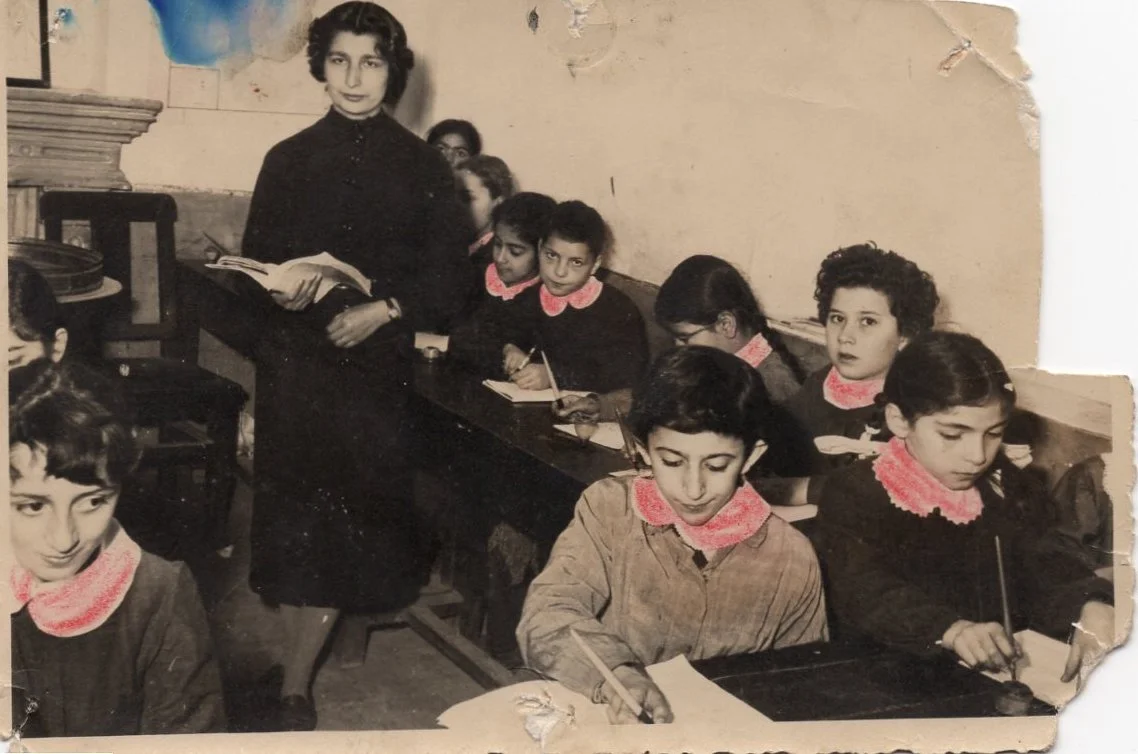
You don’t need to arrive organized.
You don’t need to know what matters yet.
We begin with what’s there.
Here you’ll find a clear overview of how personal archive organization and archival preservation typically move forward, including how we begin, how decisions are made, and what the completed work looks like.
We commonly work with:
Photographs & Albums
Loose prints, albums, framed photographs, and boxes of mixed images, handled slowly, with attention to condition and context.
Letters, Papers & Documents
Personal correspondence, notebooks, certificates, diaries, and family papers that carry both information and memory.
Slides, Negatives & Home Media
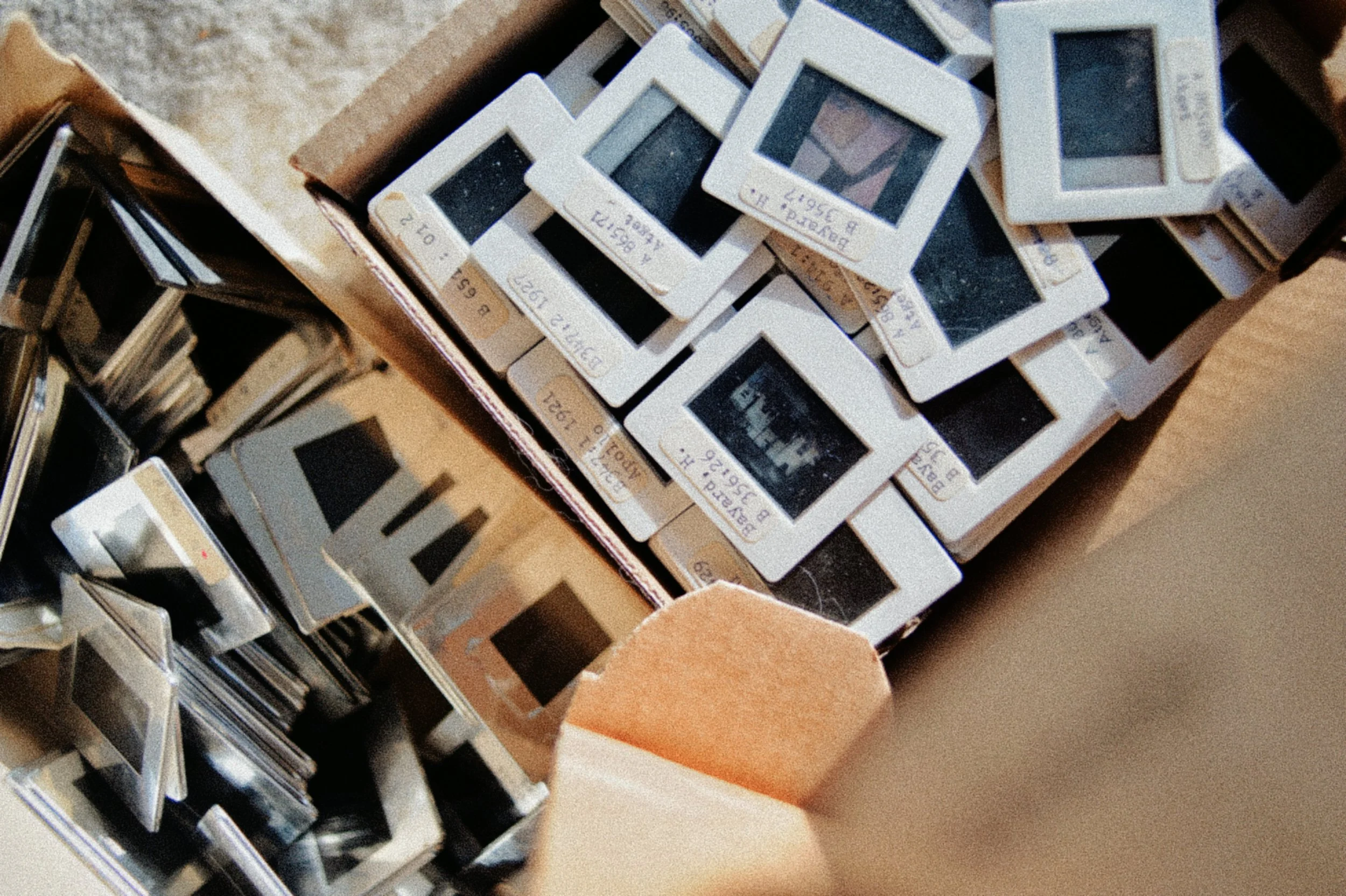
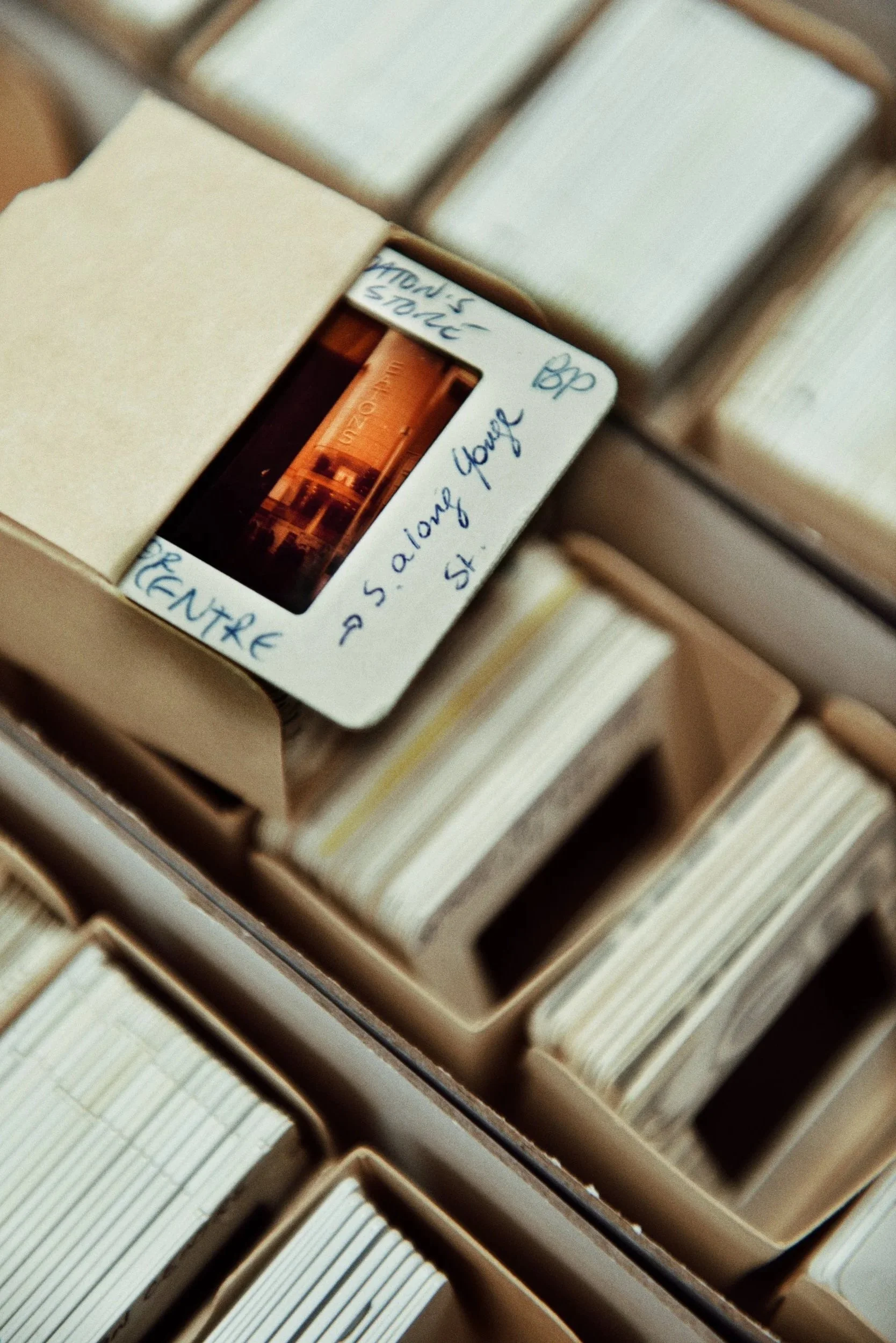
35mm slides, negatives, film reels, and other photographic formats that often require careful handling and interpretation.
Digital Files & Hard Drives
Scattered folders, old computers, external drives, and digital photos without structure or naming systems.
Choosing What to Keep
Many people come to this work feeling unsure:
Unsure what should be kept
Unsure what can be let go
Unsure how to decide without regret
You don’t need to make those decisions alone.
Archival care is not about saving everything.
It’s about understanding what you have, creating structure, and allowing materials to be returned to over time.
If you’re not sure what you have
That’s normal.
Most people feel the same way.
We assess materials together, talk through options, and move at a pace that respects both the records and the people connected to them.
If it feels meaningful, confusing, heavy, or unfinished, it belongs here.
How Personal Archive Organization Works:
-
We begin with a focused conversation and a review of your materials — physical, digital, or both. This allows us to understand scope, volume, condition, and your goals.
We identify priorities, potential risks, and practical next steps before any larger work begins.
You receive:
Clear understanding of what you have
Preliminary scope recommendation
Proposed structure for personal archive organization
Written summary outlining suggested next steps
-
Materials are carefully reviewed and organized into a logical, sustainable system. This applies to family photo organization, personal documents, and digital archive structuring.
Photographs, letters, and records are grouped meaningfully. Digital files are reviewed and reorganized into clear folder structures with consistent naming systems.
You receive:
Structured archive system (physical and/or digital)
Defined categories and folder architecture
Clear file naming guidelines for digital materials
Reduced duplication and improved accessibility
-
Where needed, materials are stabilized and rehoused using archival preservation principles. The goal is not perfection, but long-term protection and usability.
Albums, loose photographs, negatives, and documents are handled with care and practical preservation guidance.
You receive:
Archival storage recommendations
Safe handling guidelines
Rehousing or stabilization as appropriate
Preservation plan suited to your materials
-
Once the structure is established, we review the system together. An inventory or content overview is created at the appropriate level (box, folder, or file).
The aim is to ensure the archive is not only organized but also understandable and maintainable.
You receive:
Practical archive inventory
Summary of organizational logic
Clear maintenance plan
Guidance for future additions to your archive
All projects are personally handled by a trained archivist with experience in institutional archival standards and private collections.
Work may take place in-home, remotely, or in a studio setting depending on project needs.
Typical Project Timeline
Every archive is different.
Smaller projects may be stabilized in a few focused sessions. Larger personal archives — especially those involving mixed physical and digital materials — may unfold over several weeks in stages.
During the initial assessment, you’ll receive a realistic time estimate based on volume, condition, and goals.
How Pricing Is Determined
Pricing for personal archive organization and archival preservation in Toronto is based on:
– Volume and complexity of materials
– Condition and preservation needs
– The balance between physical and digital work
– The level of inventory detail required
After the initial consultation, you’ll receive a clear proposal outlining scope, recommended approach, and an estimated investment before moving forward.
No open-ended work begins without agreement.
The goal is clarity — not overwhelm. A structure that allows your photographs, documents, and digital files to remain accessible and meaningful over time.
You don’t need clarity to begin.
Clarity comes through the work.
Tell Us About What You Have
You don’t need everything figured out.
This form helps me understand what you have and how I can help.
I’ll review your message and follow up thoughtfully.